

How do SMM panels work?

People who search How do SMM panels work? are usually not looking for a complicated technical explanation—they want clarity and reassurance. Most are new users who are about to place their first order and want to understand what happens after they click “buy.” They are also trying to confirm whether the process is automated or manual, and where likes, followers, or views actually come from. Another common concern is safety: users want to know if the system can harm their account or create suspicious activity. Many readers are also comparing panels and want to know which parts are controlled by the panel and which parts depend on providers. This introduction prepares you for a transparent, step-by-step explanation so you can understand the process without guessing.
To start with the basics, an smm panel is best understood as a service marketplace that connects users to social media growth services through a structured ordering system. The panel itself usually does not “create engagement” magically; instead, it organizes services, routes orders, and tracks delivery. That means the user’s role is simple—choose a service, submit the link and quantity, and monitor the status—while the platform handles the workflow behind the scenes. If you are still learning the general concept of panels, you can also read What is a SMM panel? later, but this page focuses specifically on the working mechanism and delivery flow.
How do SMM panels work?
SMM panels work through a simple order-routing process that looks easy on the front end and more structured behind the scenes. First, a user selects a service (followers, likes, views, etc.) and submits an order with a target URL or username plus a quantity. Next, the panel system validates the order format, checks the service rules, and queues the request in its internal order manager. After that, the panel sends the order to a connected provider source (often automatically) and begins tracking delivery progress. As delivery happens, the panel updates order statuses such as pending, in progress, and completed to keep users informed. If the service includes extra protections like refill or drip-feed, the panel also applies those rules during or after delivery. This is why panels feel “instant” to users, even though multiple steps are running in the background.

What the Article Must Clarify Early
The most important clarity is that SMM panels are organized service platforms, not hacking tools, and not manual teams that type actions one by one. In most cases, the user does not need to manage anything after placing the order because the system handles routing and tracking automatically. Another critical point is that service results vary because panels depend on different providers and service types, so “one order” is not the same as another in quality and stability. It is also essential to understand that reputable panels do not require passwords for standard services, because delivery is usually link-based. Users should also know that safety depends more on how they use the panel than on the panel existing at all—large spikes and unrealistic growth patterns increase risk. Finally, the goal of this article is to remove mystery: once you understand the workflow, you can make smarter choices and avoid common mistakes.
Core Concept: How SMM Panels Work
At the simplest level, an SMM panel is a structured ordering interface that routes your request to the correct delivery source. You choose a service, submit the target link, select quantity, and confirm the order. The panel then pushes the order into its processing system, which either fulfills it directly through connected sources or forwards it to providers through API. While delivery happens, the system reports status changes and records progress so you can track what is happening without guessing. If your order includes controlled delivery settings, the panel schedules the delivery in smaller portions rather than sending everything at once. If drops happen and the service includes refill rules, the panel can also attempt to restore counts within the policy window. This simple logic is why panels are easy to use for beginners while still functioning like a structured backend system.
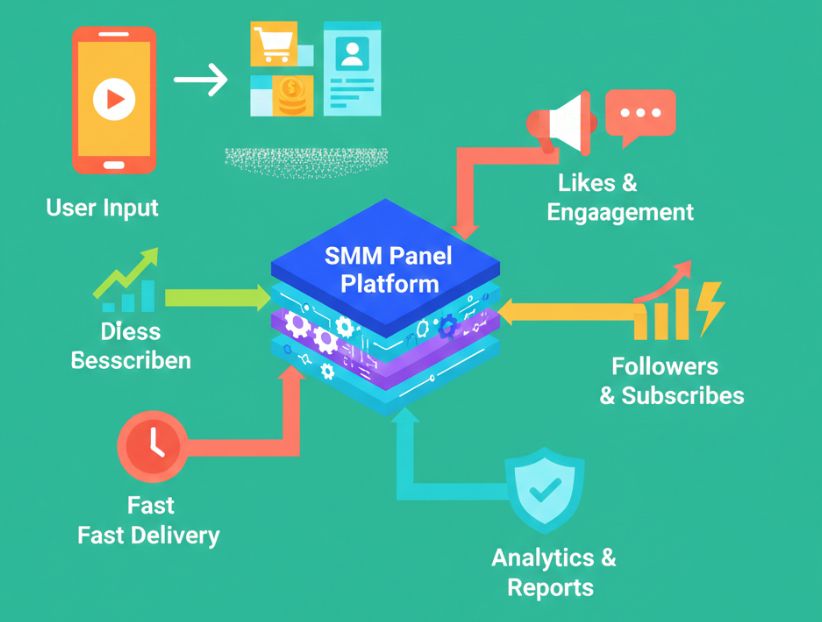
How SMM Panels Actually Operate Behind the Scenes
Behind the dashboard, most panels function like a routing layer between customers and multiple provider sources. The panel maintains a service catalog with rules such as minimum/maximum quantity, average delivery time, and quality level indicators. When you place an order, the system matches your request to a provider route that can deliver the chosen service under those rules. Many panels rely on API connections to send orders instantly to providers, then receive progress updates automatically so the dashboard can reflect real-time status. The panel also records logs for troubleshooting, such as order timestamps, partial delivery events, and completion confirmations. If a provider fails or stalls, more advanced systems can re-route or retry depending on the panel’s setup and policy. This is also why stable technology matters—panels with better automation and tracking usually provide a smoother user experience.
What Happens After You Place an Order
After you place an order, the system first checks whether your target link is valid and matches the service type you selected. Then your order typically enters a queue where it may sit briefly in “pending” status, especially if the service has rate limits or scheduled delivery settings. Once the provider route accepts the job, the status usually changes to “in progress,” and delivery begins in either a steady stream or small waves. During delivery, the panel monitors completion and updates progress until it reaches the requested quantity or the service’s completion logic. When finished, the status becomes “completed,” but that does not automatically mean “permanent,” because some services can experience drops over time. If you selected a service with refill rules, the panel may protect your order within a defined window by restoring drops according to policy. This transparency is what helps users feel confident—when you understand status flow, you can evaluate performance more accurately.
Types of SMM Panel Delivery Methods
SMM panels deliver services in different ways, and understanding these methods helps you choose safer and more effective options. Instant delivery means the system sends your order immediately and delivers as quickly as the provider route allows, which can be useful for small tests but risky for large spikes. Gradual delivery spreads engagement over time to mimic natural growth patterns, which often looks more realistic and reduces suspicious activity signals. Scheduled delivery may start at a defined time window and then deliver gradually, which is useful for campaign timing and coordinated promotions. Some services may require manual checks for special cases, but reputable panels still keep the process structured and transparent. The most common safety-focused method is drip-feed, where the total quantity is split into smaller chunks across hours or days. If you want a full breakdown of drip-feed logic and why it’s used, read What Is Drip Feed in SMM Panel?.
What Determines Speed and Quality
Speed and quality depend on multiple factors, and this is the reason two panels can feel very different even when they offer similar services. The service type matters first—views often deliver faster than high-quality followers because the sourcing and limits differ. Provider quality also plays a major role: stronger providers usually deliver more consistently, while weaker sources may spike quickly and drop later. Your order size influences speed because large orders can trigger throttling, especially when the system tries to keep delivery realistic. Platform behavior matters too, because social networks respond differently to sudden changes and may limit activity patterns that look unnatural. Drip-feed settings can intentionally slow delivery to improve naturalness and stability, which trades speed for reduced risk. Finally, refill policies can affect perceived quality, because services that support refills tend to be designed for longer-term stability rather than one-time delivery.

Common Misunderstandings About How SMM Panels Work
One of the biggest misunderstandings is the idea that panels “hack accounts” or require secret access to deliver services, which is not how reputable platforms operate. Another myth is that everything is always fake and useless, but the reality is that service types and quality tiers vary widely, so results depend on what you choose and how you use it. Some users believe panels are always illegal, but legality is usually separate from platform terms, which is why understanding policies matters before purchasing. Another common misconception is that every order should be instant and permanent, but delivery methods and drops depend on service rules, provider sources, and user behavior. Many people also think the panel itself is the provider, when in practice the panel is often the interface that routes to providers. If you want clarity on legality and compliance differences, read Is an SMM panel legal?. If you want to validate legitimacy concerns, read is smm panel real?.
How Users Should Use SMM Panels Correctly
Using panels correctly is about controlled growth, not aggressive spikes that create unnatural patterns. A smart approach is to start with small test orders to measure delivery speed, drop behavior, and the overall stability of the service. Next, scale gradually and match the volume to your posting schedule so engagement patterns look consistent with your real activity. Drip-feed can help you avoid sudden jumps, especially for followers and sensitive engagement types, because it spreads delivery naturally over time. It is also important not to stack multiple large orders from different sources at the same time, because overlapping spikes can increase risk and make results harder to track. Monitor outcomes after completion, and use refill-protected services when stability matters so you don’t constantly reorder to maintain counts. If you want deeper safety practices and risk awareness, read Is an SMM panel safe?.
Final Verdict: How SMM Panels Really Work
SMM panels work through a structured ordering workflow that routes your request to delivery sources and tracks progress through a dashboard. In most cases, the process is automated, using API connections and internal order management so users don’t need manual involvement after submission. The user’s responsibility is choosing the right service type, placing realistic orders, and scaling gradually to keep patterns natural. Features like drip-feed and refill exist because social platforms react to spikes, drops can happen, and stability matters for long-term outcomes. This is why understanding the mechanism is valuable: once you know how routing, delivery, and tracking work, you can evaluate quality and reliability more intelligently. If you want a decision framework for choosing better providers, read How to choose a reliable SMM panel?. If you want to understand the professional role versus the tool, read What Does a SMM Do?.
Process Table: What Happens From Order to Completion
| Step | What You Do | What the Panel Does | What You Should Watch |
|---|---|---|---|
| 1) Select Service | Choose followers/likes/views, set quantity | Shows rules, limits, and service notes | Minimum/maximum and delivery method |
| 2) Submit Target | Paste URL/username | Validates format and queues the order | Correct link and correct service match |
| 3) Routing | No action needed | Sends order to provider route (often via API) | Status changes from pending to in progress |
| 4) Delivery | No action needed | Delivers instantly or gradually (drip-feed) | Speed, pacing, and natural patterns |
| 5) Completion | Review results | Marks completed and logs final count | Any drops after completion |
| 6) Aftercare | Monitor stability | Applies refill if service includes it | Refill window and policy rules |
SMM Panel Services We Provide
To apply the workflow you learned above in a practical way, we provide Instagram-focused services that can be ordered through the same structured process: select a service, submit a target, and track delivery status. The best practice is to start small, confirm stability, and then scale gradually using safer pacing when necessary. Each service below supports a different growth goal, and combining them thoughtfully often produces more realistic patterns than relying on a single metric. For more details about each option, you can visit the service page directly using the exact service name below. This also helps you learn what to submit as a target and what to expect in delivery speed and stability.
Buy Instagram Followers works by delivering followers to the username you provide, usually starting after the order is accepted and routed to a provider source. Delivery may be instant or gradual depending on the service type, and gradual methods often look more natural for account safety. Followers are best scaled slowly so your profile growth matches content activity and avoids sudden spikes. If drops occur, the refill policy (when included) can help restore numbers within the defined window. This service is typically used for improving profile credibility, especially when your content is already consistent.
Buy Instagram Likes works by sending likes to a specific post URL you submit, and the panel tracks progress until the requested quantity is reached. Likes often deliver faster than followers, but pacing still matters when you want a realistic engagement pattern. Many users apply likes to new posts to support early traction, especially when posting consistently. The safest approach is matching likes to your typical reach so the post doesn’t look artificially inflated. When used strategically, likes can strengthen social proof without replacing real content performance.
Buy Instagram Comments works by delivering comments to a post URL, often requiring more careful sourcing and pacing than likes. Comments are a higher-sensitivity metric, so quality and timing matter more for credibility and natural appearance. A controlled delivery method can reduce unnatural bursts that make a post look forced or scripted. This service is usually best for key posts such as launches, offers, or important announcements where visible interaction affects trust. For best outcomes, combine it with real engagement strategies rather than using comments alone.
Buy Instagram Views works by sending views to a video or post URL and is often one of the fastest services to deliver. Views are commonly used to support visibility and perceived reach, especially for video-based content. Because views can scale quickly, responsible pacing still matters if you want the growth to look realistic. This service is often used for content testing, promotions, and improving the first impression of a video’s performance. Many users pair views with engagement signals for a more balanced growth pattern.
Buy Instagram Impressions works by increasing exposure signals so your content appears more “seen” over time. Impressions are useful when you want branding-style visibility rather than only focusing on likes or followers. Delivery behavior can be influenced by service rules and pacing, and consistent patterns usually look more believable than random spikes. Impressions are strongest when combined with real content value, because repeated exposure without engagement can feel unbalanced. This service supports awareness goals and helps content look more active during campaigns.
Buy Instagram post Saves works by delivering saves to a post URL, which is often associated with high-interest content and should be used carefully. Saves can signal that content is valuable enough to revisit, so they are best applied to educational posts, guides, or product information. Because saves are a strong metric, unnatural spikes can look suspicious, which is why moderation and pacing matter. This service can support credibility when your content genuinely matches the “save-worthy” behavior. For stability, it’s best to align saves with your audience size and content performance level.
Buy Instagram Profile Visits works by sending visit activity toward your profile, which can support discovery and conversion behaviors like follows and DMs. It’s especially useful during promotions, launches, or Reels campaigns where you want more people to check your profile after seeing content. Visits should match your marketing activity so they look consistent and purposeful rather than random. This service is most effective when your profile is optimized with a clear bio, highlights, and strong content structure. Used correctly, it supports a realistic growth funnel: visibility → visits → action.
Buy Instagram Reels Views works by delivering views to a Reels URL and can help create early momentum for short-form content. Reels often depend on initial activity signals, so a well-timed view boost can support discoverability and perceived performance. The safest approach is pacing views so the growth matches your posting time and normal content reach. This service is frequently used for testing hooks and formats, because faster feedback helps refine content strategy. Pairing Reels views with consistent posting improves long-term results more than one-time spikes.
Buy Instagram Reposts works by increasing repost activity for content that is designed to be shared, such as announcements or campaign posts. Reposts can improve perceived virality, but they should be used carefully because sudden repost spikes can look forced. A controlled delivery pattern is usually the best option when you want the behavior to appear natural. This service works best when the content itself has strong share value and fits the audience’s interests. When combined with real community engagement, reposts can support broader visibility and trust.
Buy Instagram Story Views works by delivering views to your Stories, supporting daily visibility and consistent activity signals. This is helpful for businesses that post frequent updates, offers, behind-the-scenes content, or community-building Stories. Story views should align with how often you post; consistent patterns look more believable than irregular spikes. This service is strongest when Stories provide real value so viewers have a reason to watch and stay engaged. Used responsibly, it supports a stable daily presence without replacing real content quality.
Buy Automatic Instagram Likes works by automatically sending likes to new posts according to your chosen settings, which supports consistency for frequent posters. Instead of manually ordering likes every time, automation keeps engagement support aligned with your posting rhythm. The key is setting realistic levels that match your account size, so the pattern remains natural and sustainable. This service helps reduce repetitive work and improves predictability in campaign execution. For best results, combine it with consistent content publishing and gradual profile growth habits.

Frequently Asked Questions
1. How does an SMM panel work?
An SMM panel works by letting you select a service, submit a target link or username, and place an order through a dashboard. The panel then routes that order to a provider source, often through automation, and tracks delivery status until completion. You usually see statuses like pending, in progress, and completed, which helps you understand where your order is in the process. The exact results depend on service type, provider quality, and how responsibly you scale your orders.
2. Are SMM panels automated?
Yes, most SMM panels are largely automated, especially for common services like views and likes. Automation means orders can be routed quickly and tracked through system updates without manual handling from the user. Many panels use API connections and internal order managers to speed up processing and reduce human error. That said, service outcomes still depend on the quality of the provider routes connected to the panel.
3. Where do SMM panel services come from?
Most services come from provider sources connected to the panel, which fulfill orders using their own delivery systems. The panel acts as the interface and routing layer, while providers supply the actual engagement delivery. Because provider quality varies, different panels (or different services within the same panel) can behave differently in speed and stability. This is why testing small orders before scaling is a smart and safe approach.
4. What happens after I place an order?
After placing an order, the panel validates your target, queues the request, and routes it to an eligible provider source. Your order status changes as it moves through the system, typically from pending to in progress and then to completed. Delivery starts once the provider accepts the order, and progress is tracked by the panel dashboard. If the service includes refill or controlled delivery, the panel can apply those rules during or after completion.
5. Are SMM panels instant?
Some services can deliver quickly, but not all orders are truly instant. Delivery speed depends on service type, order size, provider capacity, and whether safer pacing methods are used. For sensitive metrics like followers, gradual delivery is often more realistic than sudden spikes. Users should view “instant” as “fast processing,” not as a guarantee that every service will complete immediately.
6. Can I track my order?
Yes, most panels provide order tracking through status updates and order history logs. Tracking helps you see whether an order is pending, delivering, or completed, and it can show progress during delivery. This visibility reduces confusion and helps users identify delays or stalled orders early. For best control, keep your order links organized and monitor stability after completion as well.
7. Do SMM panels require login access?
Reputable panels do not require passwords for standard services, because most delivery is link-based. If a panel asks for login credentials for common engagement services, that is a major warning sign and should be avoided. Safe ordering typically requires only a username or a post URL, depending on the service. Always prioritize privacy and choose services that do not create unnecessary account security risk.
8. Why do some orders take longer?
Orders can take longer due to provider capacity, platform limits, large order size, or safer pacing settings like gradual delivery. Some services are intentionally slowed to reduce unnatural spikes and improve stability. Delays can also occur if the target link is incorrect or if the service is temporarily rate-limited. This is why reading service descriptions carefully and starting with small tests can prevent frustration.
9. Are SMM panels safe to use?
SMM panels can be safe when used responsibly, with realistic volumes and gradual scaling. Safety depends on your behavior and the quality of the services you choose, not just the panel itself. Aggressive spikes and low-quality sources increase risks like drops and unstable patterns. Using features such as drip-feed and refill-protected services can improve stability, but no method guarantees zero risk.
10. Can I cancel an order after placing it?
Sometimes cancellation is possible, but it depends on the panel’s policy and the order’s status. If an order is still pending and has not been routed for delivery, cancellation may be allowed in some systems. Once delivery begins, many services cannot be reversed because the process is already in motion. The best approach is to confirm targets and quantities carefully before submitting the order to avoid cancellation issues.
Additional reading that may help you understand panel structures and business models includes what is child panel in smm panel and how to create smm panel free?. To understand retention policies and stability logic in more depth, you can also review what is refill in smm panel?. If you want to learn how panels are built from a technical standpoint, read what is smm panel script.
If you want a full profitability mindset around panel operations and pricing strategies, review Is an SMM panel profitable?. For a combined trust-and-safety view, it helps to compare multiple topics across your learning path rather than relying on one article. This is how users build confidence: understand the workflow, evaluate reliability, apply safety features, and scale responsibly. When those pieces fit together, using a panel becomes a controlled growth process instead of a risky guess.